

The Case for Olympic Weightlifting in Female Team Sports
New research shows both heavy squats and Olympic weightlifting improve performance, even during the competitive season.

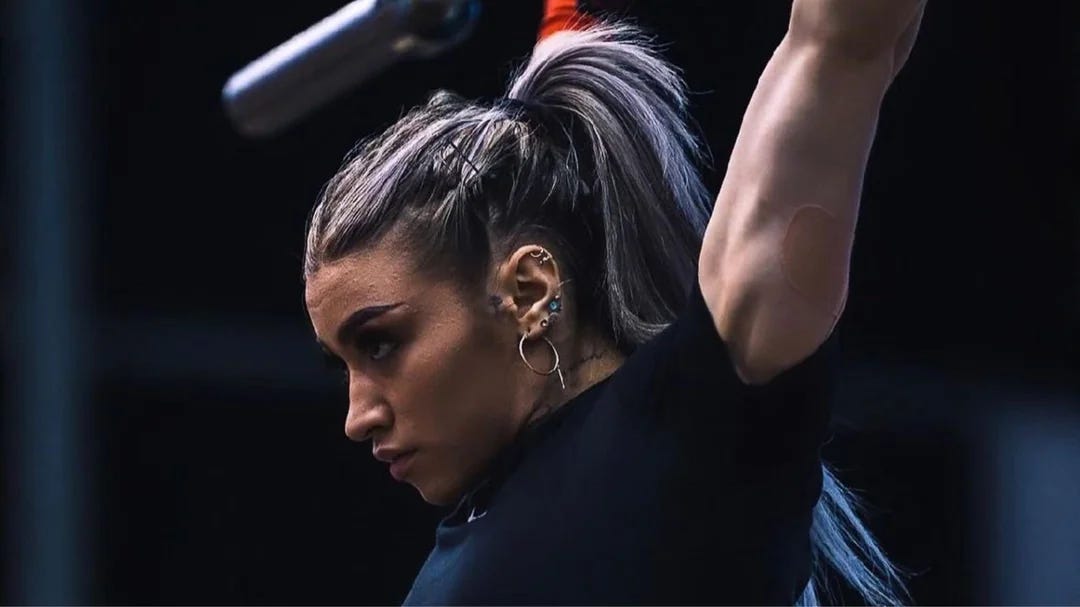
Two groups of young female handball players got stronger and jumped higher after just six weeks of resistance training, whether they lifted heavy or snatched moderately. But neither approach changed their force-velocity profile.
Researchers from the Hungarian University of Sport Science put 27 teenage female handball players through two different in-season strength programs to find out which worked better: heavy back squats or moderate-load Olympic weightlifting. They also wanted to know whether either method would shift the athletes’ force-velocity (FV) profile — a measure of whether an athlete is more force-limited or velocity-limited in their power output.
Both programs resulted in gains. Neither was clearly superior.
Aim
The study set out to compare the effects of a short-term heavy-load squat program versus a moderate-load Olympic weightlifting program on maximal strength and the FV profile in young female handball players. Researchers also included a control group doing only bodyweight work to serve as a reference point.
Methods
Players from three handball clubs were assigned to one of three groups for a six-week, in-season training block with two sessions per week:
SQUAT group (n=7): Linearly periodized back squats starting at 80% of estimated 1RM, progressing to 92% by the final week, for 5 sets of 3 reps
Olympic Weightlifting group (OWG, n=12): Hang power snatch, power cleans, and push presses at roughly 60-65% of 1RM back squat, 3 sets of 2 reps per movement
Control group (CG, n=8): Bodyweight and light resistance band work, 8-10 reps per set
All three groups continued their regular handball training — five sessions of 120 minutes per week plus weekend matches. Before and after the intervention, players were tested on their 5-repetition maximum (5RM) back squat and countermovement jump (CMJ) height. The FV profile was built using loaded CMJ testing at 25%, 50%, and 75% of body mass on a force platform, following the Samozino method.
Results
Both the SQUAT and OWG groups improved significantly in maximal strength and jump height. The control group did not.

The OWG showed a slightly larger strength gain despite training at lower relative loads. Researchers suggest this may be because the weightlifting group performed more squat variations — including front squats and overhead squats, engaging the core musculature differently than a standard back squat program.
The FV profile, however, did not change significantly in any group. Theoretical maximal force (F0) nudged up just 2% in both the SQUAT and OWG groups. Theoretical maximal power (Pmax) held steady in the OWG, but declined in the SQUAT and control groups. FV imbalance dropped 14% in the OWG, inching toward a more optimal balance, while it stayed flat in the SQUAT group and slightly worsened in the control group. None of these FV changes reached statistical significance.


Key Takeaways
For coaches working with young female handball players who have limited lifting experience, here is some clear and practical direction:
Both heavy squats and Olympic weightlifting work. Six weeks of either program is enough to build meaningful strength and improve jump height during the competitive season
Bodyweight-only training doesn’t cut it. The control group saw no improvement in any measure — a strong case for adding resistance training to the program, even in-season
Olympic weightlifting may have a slight edge. The OWG produced larger strength gains and was the only group to maintain maximal power and reduce FV imbalance, even at lower loads
The FV profile is stubborn. Neither training approach shifted it significantly, which suggests that six weeks is likely too short, and that targeting the FV profile may require knowing each athlete’s individual profile beforehand and programming accordingly
Novice lifters respond broadly. Because these players had limited strength training experience, both programs likely produced similar neuromuscular adaptations regardless of load type
One important limitation worth noting: the Olympic weightlifting group was coached by a weightlifting specialist, but the athletes were beginners. The researchers acknowledged that the intended maximal bar speed was probably not fully achieved, which likely blunted the velocity-side adaptation the program was designed to produce. Hormonal factors such as menstrual cycle phase and contraceptive use were also not controlled for, which could influence how individuals responded to training.

Reference
Pálinkás G, Ökrös C, Tróznai Z, Utczás K, Petridis L. The Effects of Short-Term Heavy Load Squat vs. Moderate Load Olympic Weightlifting Training on Maximal Strength and Force–Velocity Profile in Young Female Handball Players. Journal of Functional Morphology and Kinesiology. 2025; 10(2):187. https://doi.org/10.3390/jfmk10020187

You can also find me at dannyleejames.com for stories, personal training insights, and coaching.