


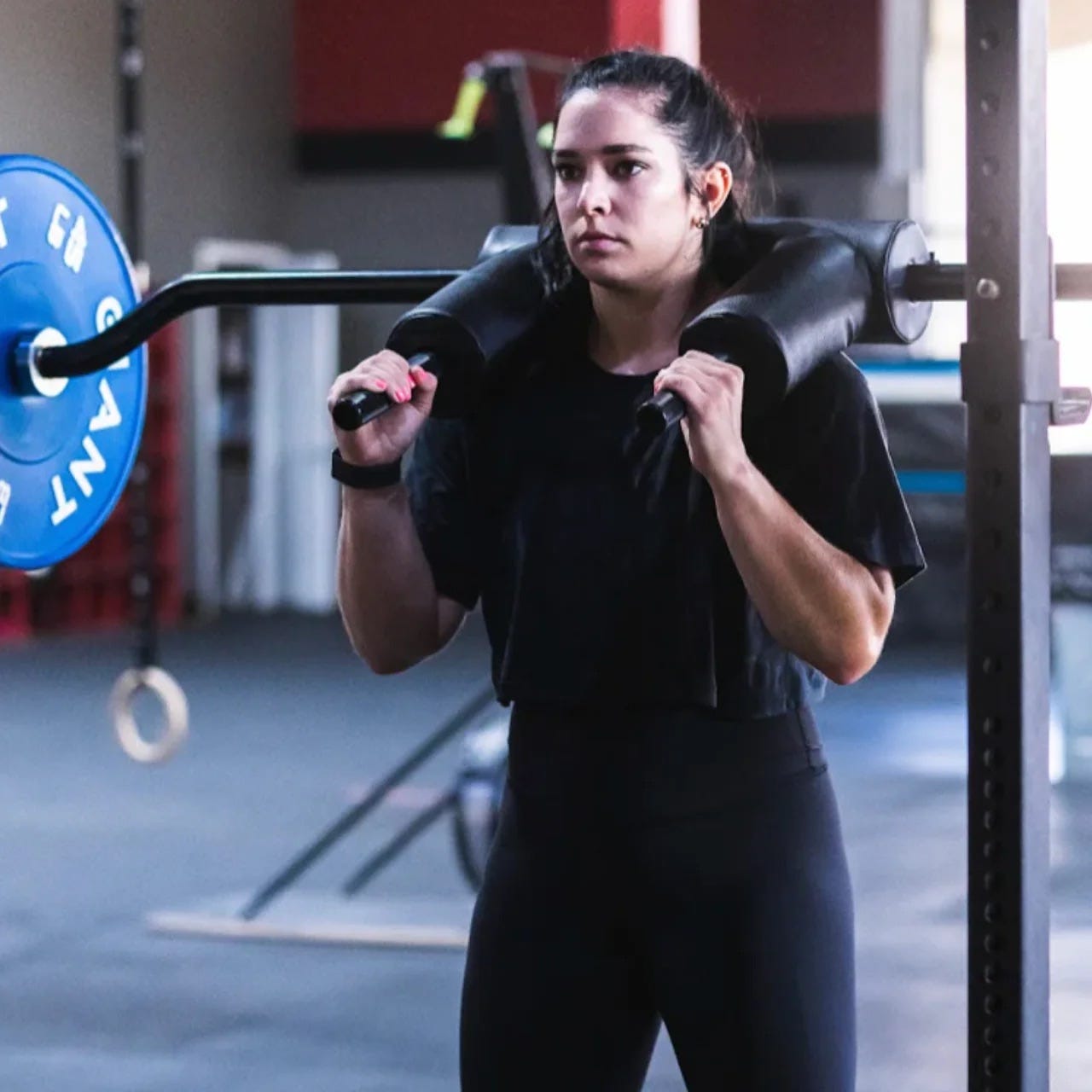
A new thesis from Appalachian State University put two of the most common squat tools head-to-head in the lab and found that while the safety squat bar (SSB) changes how the hips and ankles work, it does not change how hard the quads and hamstrings fire. That distinction matters more than most lifters realise, and the findings have implications for anyone managing shoulder issues, mobility limits, or training variety.
The study, completed by Emily C. Bauer in May 2024, compared back squats using a straight barbell (SB) and a Titan SSB across two training intensities — 65% and 85% of one-repetition maximum (1RM). They tracked three outcomes: maximum strength, power output at the ankle, knee, and hip, and muscle activation of the quadriceps (vastus lateralis) and hamstrings (semitendinosus). Twelve resistance-trained men, all with prior SSB experience, performed a three-session protocol in a biomechanics lab using motion capture and electromyography (EMG).
The found lifters moved 14.48% less weight on the SSB than the straight barbell, power output at the hips and ankles differed significantly between bars, and yet the quads and hamstrings fired at the same level with both. For lifters who cannot comfortably use a straight bar due to shoulder restrictions or an inability to create a stable "shelf" on the upper back, the SSB allows them to keep training the squat with the same muscle stimulus, but a different joint demand.
Aim
The squat is one of the most studied exercises in strength and conditioning, but there’s surprisingly little data on the safety bar squat. Does it produce the same power outputs as a straight barbell? Prior research had looked at trunk angles, bar velocity, and muscle activation with mixed results, but no study had measured ankle, knee, and hip joint power between the two bars. This study set out to fill that gap, while also revisiting the open question of whether muscle activation differs between the two variations.


Methods
Twelve resistance-trained males aged 18 to 30 volunteered from the Boone, North Carolina community. All had at least one year of back squat experience, prior SSB exposure, and were actively training three or more days per week in the six months before the study. Participants visited the lab three times: once to establish their 1RM on the straight barbell, once for their SSB 1RM, and a third session where they squatted at 65% and 85% of 1RM with each bar, performing three reps per condition.
Joint power at the ankle, knee, and hip was captured using an eight-camera VICON 3D motion analysis system with force plates sampling at 1,000 Hz. EMG electrodes were placed on the vastus lateralis and semitendinosus of both legs during the submaximal testing session to record muscle activation. Bar order was randomised across sessions to control for bias, and all squats were performed to a depth of 90 degrees of knee flexion as confirmed by a researcher.

Results
1RM values
Eleven of the 12 participants lifted more with the straight barbell than the SSB. The group average 1RM for the straight barbell was 392.04 ± 79.46 lbs., compared to 339.12 ± 72.51 lbs. on the SSB — a statistically significant difference of 14.48% (p < 0.05). Only one participant bucked the trend, lifting more with the SSB than the straight bar.