

Light Squats Before Heavy Cleans?
How the prepatory squat loading impacts clean performance.

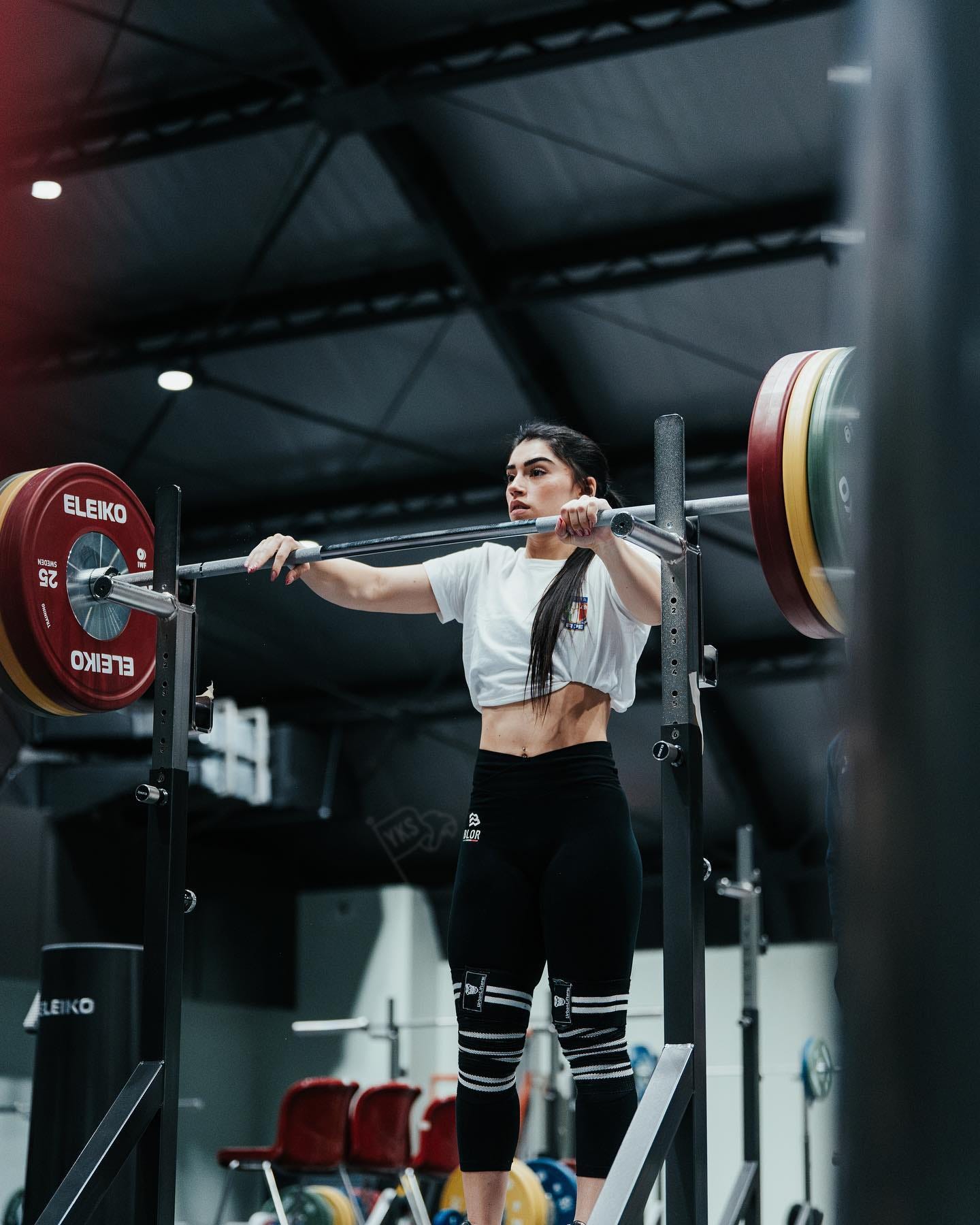
In a new study, researchers tested whether front squats with light or heavy loads work better as a pre-activation primer before a maximum clean attempt in well-trained weightlifters. They found that lighter loads moved faster than heavy loads every time, and the heavy squat group actually trended down in performance. Let’s get into it.
Aim
The study aimed to compare three pre-activation conditions — no front squat, a light front squat (LS), and a heavy front squat (HS) — on 1RM clean performance, barbell kinematics during the pull, and rated perceived exertion (RPE) in well-trained weightlifters. A secondary aim was to measure whether any changes in clean performance could be detected through changes in peak and mean barbell velocity during the pull.


Methods
Twelve well-trained weightlifters participated: nine males (age: 28.9 ± 2.5 years; body mass: 87.7 ± 7.2 kg; 1RM clean: 123.3 ± 15.6 kg) and three females (age: 25.0 ± 3.6 years; body mass: 65.0 ± 8.5 kg; 1RM clean: 86.7 ± 5.8 kg), with an average training history of 9.4 ± 3.5 years. All were active competitors recruited from three different weightlifting clubs.
The study used a randomised, counterbalanced crossover design over a 20-day window with at least 5 days between conditions. All athletes completed all three conditions:
Control (C): Standard warm-up, no front squat
Light Squat (LS): 3 sets x 3 reps at 75% of front squat 1RM
Heavy Squat (HS): 2 sets x 1 rep at 95% of front squat 1RM
In both squat conditions, athletes were instructed to move each rep with maximum intentional velocity. Eight minutes after each condition, they completed a full 1RM clean assessment, progressing from 50% of 1RM up to a maximum attempt, with a 103% attempt available if 100% was successful.
Barbell kinematics during the pull were tracked using the Weightlifting Analysis Bar Path Tracker app on an iPhone 15 Pro Max, recording at 1080p slow motion with 240fps, from a fixed position 3 metres to the side of the barbell on a tripod 1 metre off the ground. Peak velocity (PV) and mean velocity (MV) were recorded for both the first and second pull at 85%, 95%, and 100% of 1RM. RPE was collected 20 minutes after each condition on a 1–10 scale.

Results
Overall, 1RM clean performance did not significantly differ across the three conditions (p = 0.142). Athletes lifted 113.2 ± 22.6 kg in control, 113.8 ± 22.1 kg after LS, and 109.7 ± 22.0 kg after HS
When the percentage change from control was compared, however, LS significantly outperformed HS (+0.61 ± 3.3% vs. −3.0 ± 5.6%; p = 0.032). Light squats held or slightly raised the bar. Heavy squats dropped it. Nine athletes completed their 1RM clean after LS, compared to only four after HS. Two hit 103% after LS; only one did after HS.
RPE was significantly lower after LS compared to HS (4.95 ± 1.09 vs. 7.58 ± 0.97; p = 0.001), a large effect (g = 2.331).
For barbell kinematics, no statistically significant differences were found across conditions, but trends emerged at 100% of 1RM during the first pull.
When percentage changes were compared, PV at 100% of 1RM during the first pull was significantly higher for LS vs. HS (+4.63 ± 9.5% vs. −1.8 ± 12.5%; p = 0.025). Six athletes improved their first pull PV after LS; only three did after HS. No meaningful differences were found in second pull velocities across any condition or load.

Practical Takeaways
Use light front squats before max clean attempts. Three sets of 3 reps at 75% of front squat 1RM, performed with maximum intentional bar speed and followed by 8 minutes of rest, appears to be the optimal pre-activation strategy.
Avoid near-maximal front squats immediately before a max clean. The HS condition (95%, 2x1) was associated with a ~3% drop in performance and near-maximal RPE. On competition day or during a testing session, this is a meaningful difference.
Speed in the warm-up drives the PAPE effect, not load. Moving the bar fast at moderate intensity likely activates type II motor units and enhances neuromuscular readiness more effectively than slow, heavy singles.
Watch the first pull. The trend toward higher peak and mean barbell velocity at 100% of 1RM during the first pull after LS suggests the warm-up load influences how the lift starts — and a strong, technically correct first pull is a known driver of clean success. Coaches should be aware, though, that faster is not always better here; a hurried first pull can disrupt technique and ultimately reduce second pull velocity.
Use RPE as a readiness gauge. An RPE of around 5 after the squat primer appears to be the sweet spot. If athletes are reporting an 8 out of 10 after their warm-up squat, that is a red flag.
Trial both conditions in training first. Due to individual variation in PAPE response, coaches are advised to test both light and heavy pre-activation conditions with their athletes during regular training before applying them in a competition or testing context.
Keep the results in context. The sample was 12 well-trained national-level competitors, not elite international athletes. App-based kinematics tracking also carries known measurement error (mean underestimation of ~6–10% for lower loads), though the 240fps recording used here likely improved accuracy. Future studies using force plates, linear position transducers, and EMG are needed to confirm these findings.
Reference
Bampos, Z., Zaras, N., Kavvoura, A., Foteinakis, P., Avloniti, A., Stamboulis, T., Smilios, I., Terzis, G., Hadjicharalambous, M., & Chatzinikolaou, A. (2026). Effect of the front squat as a pre-activation exercise on clean performance in well-trained weightlifters. Journal of Physical Education and Sport, 26(2), Article 034. https://doi.org/10.7752/jpes.2026.02034

You can also find me at dannyleejames.com for stories, personal training insights, and coaching.