

Stronger Legs, Fewer Injuries
New research on the British men's squad shows hitting a specific strength target slashes injury risk by up to 80%

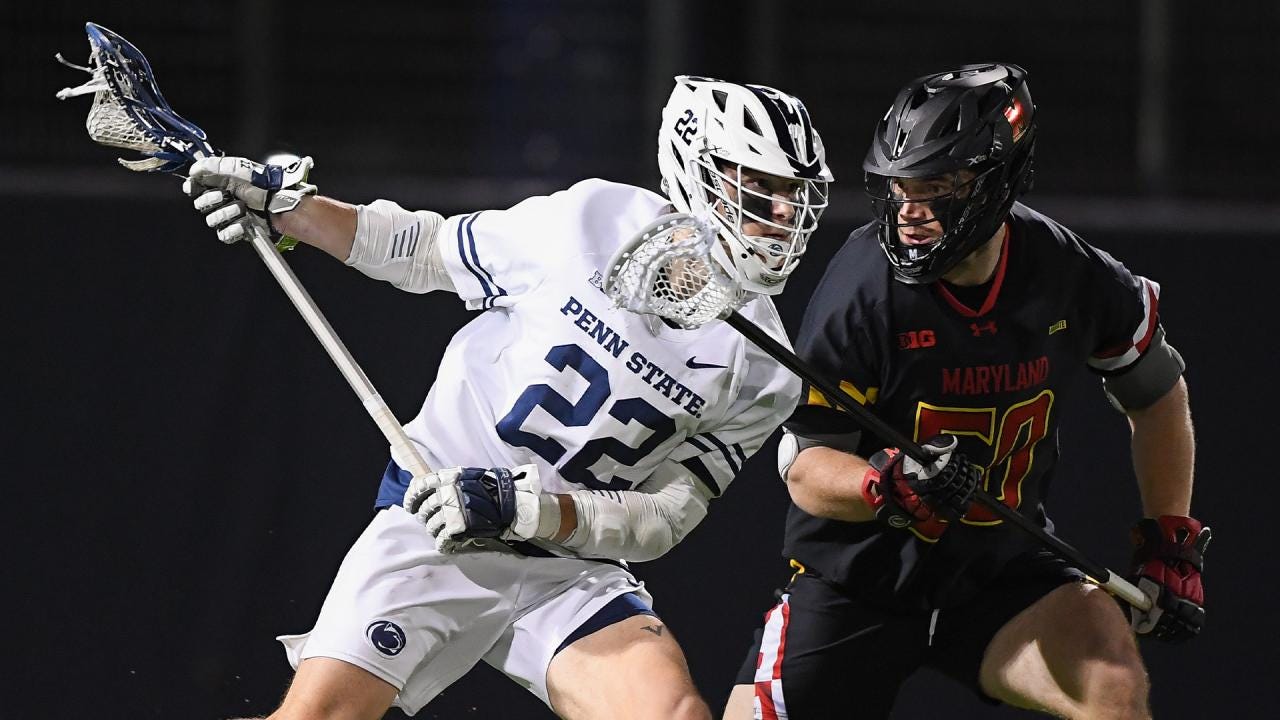
Stronger legs mean fewer injuries. That is the finding of a new study on elite sixes lacrosse players, and with the sport making its Olympic debut at the 2028 Los Angeles Games, the timing could not be more relevant.
Researchers from the University of Salford tracked 19 men from the British national sixes lacrosse squad over nine months, through training sessions, European tournaments, a US training camp, and the World Games. Before it all started, every player completed an isometric mid-thigh pull (IMTP) test to measure lower limb strength relative to their body weight. Over the following nine months, every injury was logged by the team physiotherapist.
The question: Does being stronger in the legs protect players from getting hurt?
What They Found
Players who produced more force relative to their body weight on the IMTP were significantly less likely to sustain lower-limb injuries, both noncontact injuries (think hamstring strains, ligament sprains) and overload injuries (gradual-onset problems like tendinopathies).
For every 1 N/kg increase in relative strength, the risk of a noncontact injury dropped by 67% and the risk of an overload injury dropped by 33%. That is a meaningful protective effect.
The data also pointed to specific strength targets. Players who hit at least 31.3 N/kg on the IMTP saw roughly an 80% reduction in noncontact injury risk. Those who reached 28.7 N/kg saw around a 45% reduction in overload injury risk. The average score across the squad was 28.9 N/kg, meaning most players were sitting right at or below the safer threshold.
Six players sustained noncontact injuries. Nine sustained overload injuries. The injured players consistently showed lower relative strength scores than those who stayed healthy.

Aim and Methods
The study was prospective, meaning researchers measured strength first and then waited to see who got hurt rather than working backwards. All 19 players performed three IMTP trials on portable force plates at the start of the nine-month competition period. Lifting straps were used so grip strength would not be a limiting factor.
Injuries were classified by mechanism: noncontact (no external contact involved) or overload (gradual onset, no single event). All injury data were collected and assessed by the lead physiotherapist in accordance with international injury surveillance standards.
Bayesian statistical methods were used to analyse the relationship between strength and injury, with odds ratios calculated to quantify the protective effect.
Heavy Lifting Slashes Youth Soccer Injuries by 90%

New research on elite youth players reveals that high-load strength training, working at 70-85% of maximum capacity across 12 weeks, can slash injury rates by nearly 90% while simultaneously improving speed, power, and agility. This should come as no surprise, but let’s look at what they did.
Practical Takeaways
Any strength and conditioning coach worth their salt knows that getting stronger helps.
The researchers recommend targeting a relative net peak force above 31.3 N/kg on the IMTP, which covers protection against both injury types. For a player weighing 89 kg, that means producing roughly 2,786 N of net force, which is genuinely demanding for amateur athletes who are largely self-funded and training in decentralised programs without the resources of professional sport.
The squad in this study averaged below that threshold, which is worth noting. These are elite athletes competing at the highest level of their sport internationally, but without professional structures around them, developing and maintaining adequate strength is a real challenge that practitioners need to plan creatively around.
Beyond injury prevention, building lower limb strength is also known to improve sprint speed, acceleration, deceleration, and change of direction, all of which are critical in the high-intensity format of sixes lacrosse.
One important gap the authors flag: this study only included male athletes. Female players face higher rates of ACL injury in lacrosse, and with women’s sixes also heading to the 2028 Olympics, replicating this research in female squads should be a priority.
Reference
Ripley, Nicholas Joel; Collier, Matthew; Fahey, Jack T.; Comfort, Paul. Protective Effect of Lower Limb Strength on Lower Limb Injuries Within International Sixes Lacrosse Players: A Nine-Month Prospective Study. Journal of Strength and Conditioning Research ():10.1519/JSC.0000000000005476, June 4, 2026. | DOI: 10.1519/JSC.0000000000005476

You can also find me at dannyleejames.com for stories, personal training insights, and coaching.