

The Strength and Longevity "Sweet Spot"
New research tracking 147,000 people for thirty years finds a clear ceiling on how much resistance training actually extends life.

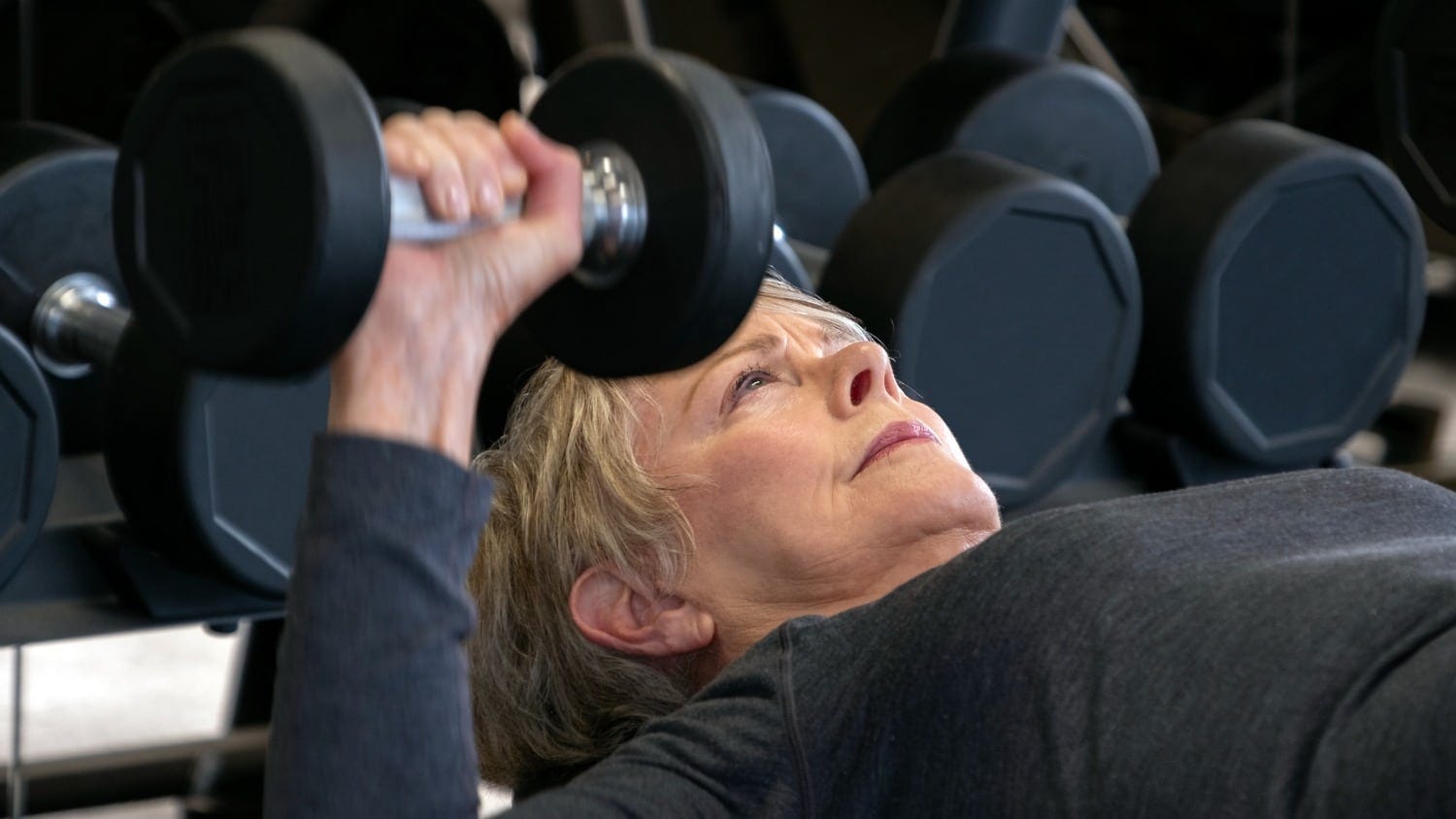
Most exercise advice focuses on cardio, but this study turns the spotlight on strength training and asks:
‘‘How much of it helps you live longer, and is there a point where more stops making a difference?’’
Researchers pulled data from three long-running health studies that followed people for up to three decades, giving them a look at how resistance training habits connect to risk of death over time. Because the majority of us aren't training for a competition, we just want to know what's worth our time. This study dove right in.
Aims and Methods
The researchers wanted to understand whether resistance training, on its own or combined with aerobic exercise, was linked to lower mortality, and whether that link differed depending on the cause of death. They drew on data from the Health Professionals Follow-up Study and both Nurses’ Health Studies, covering over 147,000 men and women. Every two years, participants reported how much time they spent on strength training and aerobic activity. Strength training included weights and bodyweight movements like push-ups, squats, and lunges. Aerobic activity covered things like brisk walking, running, swimming, and cycling. Researchers then tracked who died over the following decades and from what cause, then adjusted for other lifestyle factors that could muddy the results.


Results
People who did about 90 to 120 minutes of strength training per week had a noticeably lower risk of death overall, with the strongest drops showing up for cardiovascular and neurological disease deaths specifically. Going beyond 120 minutes a week didn’t add any extra benefit, suggesting this isn’t a more-is-better situation.
Interestingly, the relationship wasn’t the same for every cause of death. For cancer-related deaths, the benefit showed up at much smaller amounts of strength training, even just a few minutes a week made a measurable difference, and the benefit didn’t keep climbing with more volume.
Aerobic exercise on its own remained a powerful factor, and combining high amounts of aerobic activity with a moderate dose of strength training produced the lowest mortality risk of any group studied. At the very highest levels of aerobic activity, the benefit was so strong that the amount of strength training someone did almost stopped mattering.
It’s worth noting that this was an observational study. People weren’t randomly assigned to exercise groups, so the findings show a strong association rather than definitive proof of cause and effect. The researchers also relied on self-reported exercise habits and didn’t capture things like workout intensity or duration of individual sessions, which leaves some open questions.
Practical Takeaways
If you’re trying to build a routine around what the evidence supports, here’s what we can tell you. You don’t need to spend hours daily in the gym to get a meaningful longevity benefit from strength training. Somewhere around 90 to 120 minutes a week, or roughly 15 to 20 minutes most days, appears to capture most of the upside, especially for heart and brain-related health. If your main concern is cancer risk specifically, even a small, consistent amount seems to help. And if you’re already doing a solid amount of cardio, adding even modest strength training on top still seems to move the needle. The bigger picture message is that both types of movement complement each other, and a tiny bit of both can add up.
Reference
Zhang Y, Lee DH, Rezende LFM, et al. Long-term resistance training with all-cause and cause-specific mortality: assessing dose-response and joint associations with aerobic physical activity. British Journal of Sports Medicine 2026;60:874-883.