


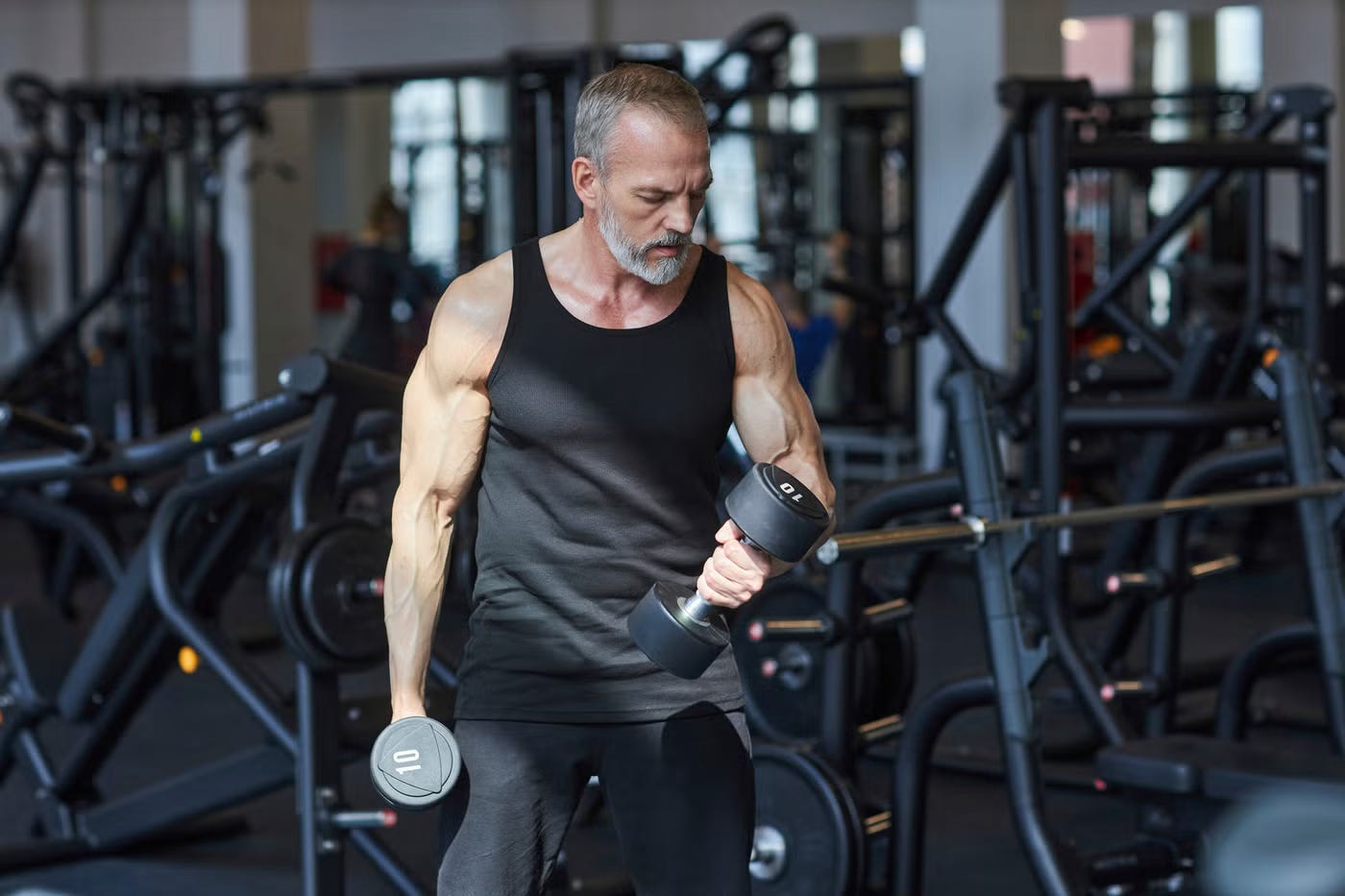
Resistance training is the best exercise for overall brain health in older adults, beating out aerobic exercise, Tai Chi-style training, and HIIT, according to a new network meta-analysis. But the full picture shows each exercise type has its own cognitive sweet spot.
The Study
Researchers from Nanjing Normal University pooled data from 37 randomised controlled trials (RCTs) covering 2,585 older adults to compare how different types of exercise affect cognitive function. Using a network meta-analysis, they were able to rank not just exercise types that had been directly compared against each other, but also make indirect comparisons across the full body of evidence.
The exercise types tested were: resistance training, aerobic exercise, high-intensity interval training (HIIT), physical and mental training (like Tai Chi and yoga), and multimodal exercise. Participants were healthy adults aged 55 and older, with an average age of 69.4 years, drawn from 13 countries, including Australia, the US, China, and Italy.

Methods
The research team searched PubMed, Web of Science, and several other databases for studies published up to May 2024. Only randomised controlled trials were included to ensure the highest level of evidence.
Cognitive outcomes were measured across five areas: overall cognitive function, inhibitory control, task-switching ability, working memory, and memory function. Tests used included the Montreal Cognitive Assessment, the Stroop Test, Trail Making Test, and the N-back Test.


Whey Protein and Resistance Training Improves Insulin Resistance in Older Men With Type 2 Diabetes
Results
The big takeaway: resistance training ranked first for overall cognitive function, with an 83% probability of being the most effective exercise type. It also topped the rankings for inhibitory control.
For memory, aerobic exercise came out on top, with a ranking probability of 80%. Physical and mental training, such as Tai Chi and yoga, was the standout for task-switching ability and working memory, with an 84% probability of being the best for working memory. Those working memory results did not reach statistical significance compared to controls, so they warrant some caution.
Practical Takeaways
Based on subgroup analyses, the researchers identified optimal training prescriptions for each exercise type.
Resistance training (overall brain health and inhibitory control):
12 weeks
2 to 3 sessions per week
45 minutes per session
Aerobic exercise (memory):
21 weeks
2 sessions per week
60 minutes per session
Physical and mental training, e.g. Tai Chi or yoga (task-switching and working memory):
12 weeks
3 sessions per week
60 minutes per session
No single exercise type does everything. If protecting memory is the goal, aerobic exercise is the pick. For overall cognitive sharpness and attention control, resistance training leads. For mental flexibility and working memory, mind-body training is the strongest option.
The researchers also note that Tai Chi-style practices may be easier to promote in older populations due to their lower intensity and strong safety profile, while HIIT carries more feasibility barriers for this age group.
Limitations
Most included studies were rated moderate risk of bias, with only one rated low risk and seven rated high risk. Different cognitive assessment tools were used across studies, which introduces variability. Long-term follow-up data was also scarce, so it remains unclear how long the cognitive benefits last after training ends.
Reference
Zhang, J., Ye, W., Li, W., Zhang, F., & Wu, Z. (2025). Comparative efficacy of exercise interventions for cognitive health in older adults: A network meta-analysis. Experimental Gerontology, 206, 112768. https://doi.org/10.1016/j.exger.2025.112768

You can also find me at dannyleejames.com for stories, personal training insights, and coaching.