

Recovery Strategies of Endurance Athletes
A survey of 264 endurance athletes reveals that psychological and evidence-based physical recovery strategies remain largely underused despite athletes believing in their benefit.

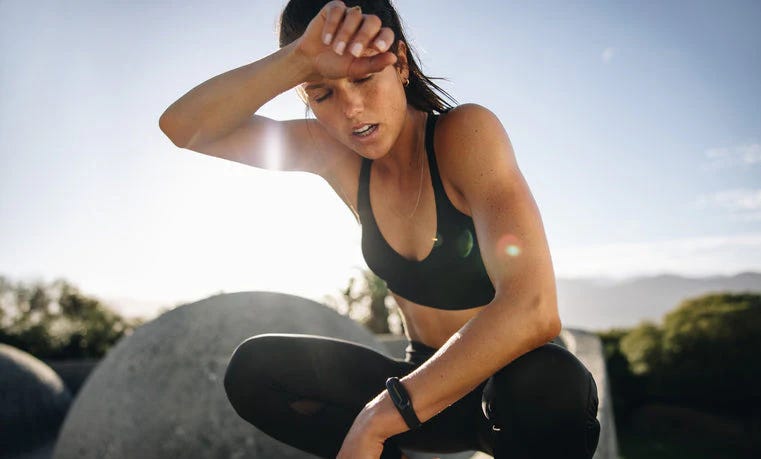
Recovery is one of the least researched areas in endurance sport relative to its importance. Endurance athletes carry high external and internal training loads, and how well they manage the stress-recovery balance directly affects performance, injury risk, and overtraining syndrome. Yet despite the complexity of recovery as a multidimensional process, covering physiological, psychological, emotional, social, and behavioural components, most athletes piece together their recovery practices from coaches, fellow athletes, and websites rather than structured, evidence-based protocols. This study documented what endurance athletes are actually doing, what they believe works, and where the gaps between those two things sit.
Aims and Methods
Researchers at Texas Christian University surveyed 264 self-identified endurance athletes spanning 11 sports, primarily running, triathlon, and cycling, across a wide age range. The group included professional, collegiate, former collegiate, and recreational athletes, with a meaningful subset having placed in the top three overall or within their age group or division during the past year.
Participants completed an online questionnaire covering four areas: Current use of recovery strategies during both training and competition, beliefs about the effectiveness of those strategies, ratings of perceived effectiveness, and sources of information and recommendations.
The survey offered a broad list of recovery modalities ranging from hydration, sleep, nutrition, and rest to active recovery, foam rolling, massage, compression garments, cold-water immersion (CWI), mindfulness, and a range of clinical modalities, including cryotherapy, dry needling, and electrical stimulation.
Responses were analysed by sex and by competition outcome, specifically whether athletes had placed in the top three overall or within their division, to identify whether recovery behaviour differed across those groups.
Every recovery method rated. Get your free guide:

Results
The most consistently used and most highly rated recovery strategies were hydration, nutrition, sleep, and rest. These four dominated across use, belief, and perceived effectiveness for both training and competition, and athletes reported using them even when they perceived no benefit, suggesting these strategies have become habitual rather than purely strategic.
Beyond those four, stretching, foam rolling, active recovery, and self-massage were commonly used during training, though their use dropped notably around competition. Massage followed the opposite pattern, used more frequently after competition than after training, likely reflecting the practical reality that massage is often provided on-site at race venues.
Athletes who placed in the top three overall or within their division used significantly more recovery strategies than those who did not, both in training and in competition. Higher-performing athletes were also more likely to have been recommended a broader range of strategies and to receive guidance from athletic trainers and sports medicine professionals rather than relying solely on coaches and peers.
Female athletes used more recovery strategies than males during training, though not during competition. Females rated a wider range of modalities more favourably, including rest, massage, stretching, cryotherapy, and contrast baths. Despite this, female athletes were largely not using the recovery strategies that research most supports for their physiology, particularly CWI and active recovery, both of which have a stronger evidence base for female athletes due to differences in thermoregulation and post-exercise blood pressure response.
One of the more striking findings was the disconnect between belief and practice. Most athletes believed massage had a benefit for training recovery, yet fewer than a third actually used it. For competition, the majority believed in active recovery, self-massage, and massage, but fewer than half of those who held that belief acted on it. Cost, time, and accessibility were cited as the likely barriers.
Cold-water immersion and cryotherapy were largely neither used nor believed in by this population, a contrast to what has been reported in elite team sport athletes. This may reflect the current literature showing limited efficacy of CWI for endurance-specific recovery compared to strength-based contexts.
Psychological recovery modalities, including mindfulness, relaxation, and imagery, were among the least used and least understood strategies. Most athletes rated them neutrally rather than with any conviction, suggesting either unfamiliarity or a lack of guidance on how to use them within a recovery program.
Most athletes (nearly half) turned to coaches and fellow athletes as their primary sources of recovery information, followed by websites. Athletes knew they had recovered primarily through subjective feelings: reduced soreness, restored energy, and the desire to train again. Only a small minority used heart rate monitoring as a recovery indicator.

Practical Takeaways
The picture this study paints is one of a population that understands recovery matters but is largely navigating it through habit, peer influence, and informal advice rather than individualised, evidence-based planning. A few things stand out for anyone working with or coaching endurance athletes.
The dominance of hydration, nutrition, and sleep as the preferred strategies is appropriate given the evidence base, but athletes tend to use these reactively rather than as part of a structured stress-recovery framework. With increasing external and internal training loads, recovery demands scale proportionally, and baseline lifestyle strategies may not be sufficient on their own.
The gap between believing in massage, active recovery, and self-massage and actually implementing them suggests that access and practicality are limiting factors worth addressing at the program design level. If athletes value these modalities but do not use them, structural solutions, such as integrating active recovery sessions into training schedules or incorporating self-massage tools as a standard part of post-session protocol, may close that gap more effectively than education alone.
The underuse of psychological recovery strategies represents a clear unmet need. Relaxation techniques, mindfulness, and imagery are not optional extras in a high-load endurance context. They address components of the recovery process that hydration and foam rolling simply do not reach, and coaches and practitioners would benefit from building these in explicitly rather than leaving them to individual initiative.
The fact that top performers use more recovery strategies, receive more formal guidance, and access a wider range of modalities points to recovery behaviour as a performance variable in its own right, not just a consequence of training quality.

Reference
Braun-Trocchio R, Graybeal AJ, Kreutzer A, Warfield E, Renteria J, Harrison K, Williams A, Moss K, Shah M. Recovery Strategies in Endurance Athletes. J Funct Morphol Kinesiol. 2022 Feb 13;7(1):22. doi: 10.3390/jfmk7010022. PMID: 35225908; PMCID: PMC8883945.