


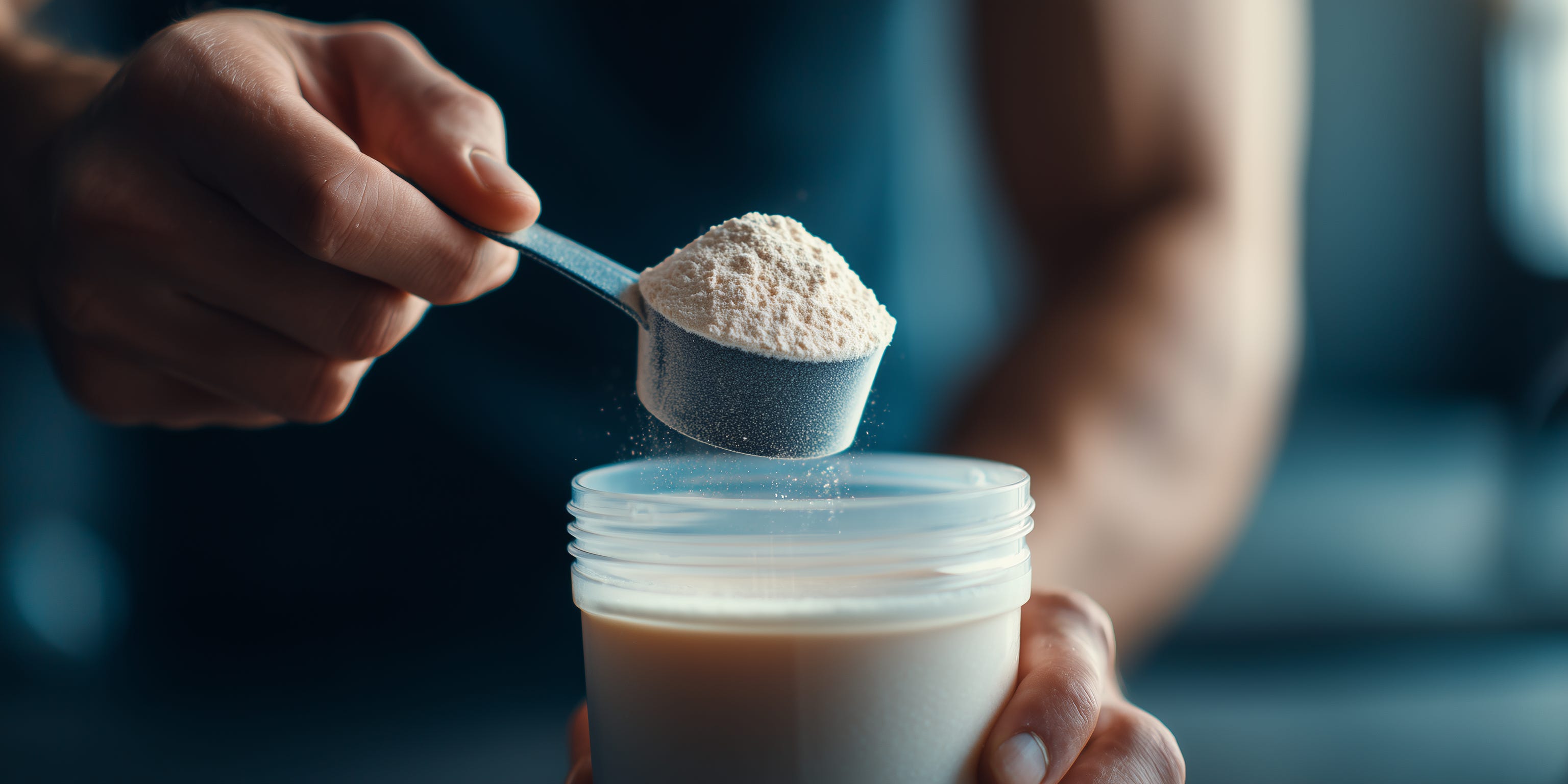
A recent randomised controlled trial revealed that timing casein protein around workouts has less impact than we thought. It doesn’t matter if you take 30 grams of micellar casein immediately after resistance training or 30 to 60 minutes before bed; timing isn’t the mechanism when both options work to meaningfully enhance recovery and anaerobic performance in highly trained soccer players within 24 hours.
The research team tested 24 male semi-professional soccer players across three groups: 8 receiving casein post-exercise, 8 receiving casein pre-sleep, and 8 controls receiving nothing. All participants did a hard strength session, hitting both upper and lower body with compound lifts and accessory work. Performance was measured before the session and exactly 24 hours later using three rigorous tests: countermovement jump height (testing explosive leg power), the Illinois Agility Test (testing directional change speed), and the Running-based Anaerobic Sprint Test (testing repeated sprint capacity).
Results Roundup
The control group, predictably, got worse. Countermovement jump height dropped 2.29 centimetres, and their anaerobic power cratered across the board.
The pre-sleep group outperformed controls in two critical areas. Countermovement jump height fell only 0.84 centimetres compared to the control group’s 2.29 centimetres decline, representing a 1.45 centimetres advantage. Their mean anaerobic power (averaging power across six 35-meter sprints) held significantly better than controls, improving by 125 watts. These were massive effect sizes: 2.04 for jump height and 1.55 for mean power, well into the “life-changing” territory for athletic performance.
The post-exercise group took a different route to similar wins. They preserved peak power output better than controls, showing a 205-watt advantage. They also maintained mean power with a 128-watt edge over controls and showed a 4.12 watt-per-second improvement in fatigue resistance (their power didn’t drop off as sharply across repeated sprints). These too represented very large effect sizes: 1.64 for peak power, 1.24 for mean power, and 1.29 for fatigue index.
Critically, when the two supplementation groups faced off directly, neither won. No statistically significant differences separated pre-sleep from post-exercise casein across any measured outcome. Both groups recovered better than controls, but they recovered equally well.
Book a call with me here.
We’ll sit down and upgrade or build out your entire training and performance program in one session.
Aim and Methods
The researchers wanted to answer a specific question: Does the timing of casein supplementation create meaningfully different recovery responses in soccer players? They recruited 24 highly trained male semi-professional soccer players (average age 20.6 years, average body weight 70.8 kilograms) who competed at national or development level with more than 6 hours of structured training per week. Participants had to be injury-free for 6 months and have no milk or casein allergies.
After a familiarisation session where players practised the performance tests and had their one-repetition maximum strength tested on back squat and bench press, participants returned 72 hours later for baseline testing. The next day, all players performed the same resistance training protocol: back squats and bench presses at 75% of their 1RM for three sets of 8 to 12 repetitions, plus auxiliary exercises (Romanian deadlifts, bent-over rows, walking lunges, shoulder presses) done for three sets at 10-repetition maximum loads. Rest intervals were standardised at 90 seconds between sets and 120 seconds between exercises. The entire session lasted 50 to 60 minutes, including warm-up.
The key difference came next. The post-exercise group consumed 30 grams of micellar casein in 300 millilitres of water within 10 to 15 minutes after finishing. The pre-sleep group received the same dose 30 to 60 minutes before going to bed. The control group received nothing. All players maintained a standardised diet with approximately 3,600 calories per day, 56% from carbohydrates, 15% protein, and 29% from fat, matching standard soccer nutrition guidelines.


Exactly 24 hours after the training session, all players returned for post-testing using identical protocols. Three performance metrics were measured:
Countermovement Jump: Players performed maximal vertical jumps with hands fixed at their waist on a specialised platform, with the highest of two attempts recorded.
Illinois Agility Test: A 10-by-5-meter course with zigzag sprints through central cones, measuring time in seconds.
Running-based Anaerobic Sprint Test: Six maximal 35-meter sprints with 10 seconds passive recovery between each. Power output was calculated for each sprint, and researchers tracked peak power (the highest single sprint), mean power (average across all six), and fatigue index (how much power dropped off from best to worst sprint).
The research team maintained rigorous controls throughout. Players abstained from alcohol and caffeine for 24 hours before testing. All protocols occurred between 2 and 4 in the afternoon to minimise circadian rhythm effects. Dietary intake was monitored daily using food logs and analysis software. The assessors measuring performance were blinded to group allocation. Sleep patterns were maintained as habitual, though not objectively monitored, which represents a study limitation.
Results
Jump Performance: The pre-sleep casein group showed the most impressive results on countermovement jump. Their decline from pre to post was only 0.84 centimetres, compared to 2.29 centimetres in the control group. This 1.45-centimetre advantage was statistically significant with an effect size of 2.04, qualifying as very large. The post-exercise group declined 1.66 centimetres, which was also better than controls but not statistically significantly different from pre-sleep.
Anaerobic Power: The post-exercise group excelled here. Peak power (the single most powerful sprint) showed a 205-watt advantage over controls, with an effect size of 1.64. Mean power across all sprints showed a 128-watt advantage (effect size 1.24). The pre-sleep group showed a mean power 125 watts higher than controls (effect size 1.55). Essentially, post-exercise casein preserved peak power better, while pre-sleep casein preserved consistent power output better.
Fatigue Resistance: The post-exercise group’s fatigue index improved by 4.12 watts per second (effect size 1.29), meaning their power output stayed more stable across the six sprints. The pre-sleep group showed no statistically significant difference in fatigue index compared to controls.
Agility Performance: The Illinois Agility Test showed no statistically significant improvements in either supplementation group compared to controls, though the pre-sleep group trended toward improvement.


Practical Takeaways
The most useful finding here contradicts common supplement marketing: timing is flexible. Both casein intake schedules supported recovery meaningfully. For soccer players managing recovery during congested training or match schedules, this means you can choose based on what fits your day rather than chasing some mythical “optimal window.”
If your goal centres specifically on explosive leg power and jumping ability, the pre-sleep approach showed a slight edge, reducing the performance decline by 1.45 centimetres versus controls. This would matter in sports where vertical reach determines success.
If you’re prioritising peak anaerobic power output and want to minimise fatigue during repeated high-intensity efforts, post-exercise intake showed advantages, preserving power better across multiple sprints. This suits athletes managing back-to-back sessions or congested fixture schedules.
For most soccer players, the honest answer is that total daily protein intake matters more than the specific timing. The study used a fixed 30-gram dose rather than body-weight-adjusted amounts (approximately 0.4 grams per kilogram). Given the players’ body weights clustered around 70 kilograms, this amounted to approximately 0.38 to 0.46 grams per kilogram, falling right within the established optimal range for muscle protein synthesis. Neither supplement method beat the other enough to justify being dogmatic about timing.
The research also highlights that casein’s slow digestion profile, releasing amino acids over 7 to 8 hours post-ingestion, suits extended fasting periods like sleep. Its 3.4-gram leucine content per 30-gram serving provides sufficient stimulus for muscle protein synthesis. Compared to plant-based proteins, casein shows superior digestibility at 95% versus 85 to 90% for alternatives.
One legitimate limitation worth noting: this was an acute study measuring 24-hour recovery. Whether pre-sleep and post-exercise timing create different long-term adaptations over weeks of training remains unknown. Sleep duration and quality, particularly relevant for pre-sleep supplementation, weren’t objectively monitored. The sample of 24 players, while appropriate for this design, represents a relatively narrow population of healthy young soccer players. Technical and tactical on-field performance weren’t measured; only laboratory anaerobic tests.
The practical reality: taking 30 grams of casein either immediately after training or 30 to 60 minutes before bed both support anaerobic recovery in soccer players. Choose whichever fits your schedule, your goals, and your lifestyle. Sufficient total daily protein intake remains the real driver of adaptation.
Reference
Bayrakdaroğlu, S.; Ateş, Z.H.; Ceylan, H.İ.; Kul, M.; Muntean, R.I.; Dhahbi, W. Casein Supplementation Timing and Exercise Performance in Soccer Players: Pre-Sleep vs. Post-Exercise Intake—A Randomized Controlled Trial. Nutrients 2025, 17, 3938. https://doi.org/10.3390/nu17243938

You can also find me at dannyleejames.com for stories, personal training insights, and coaching.