

You Can Build Muscle and Lose Fat at the Same Time
And protein is the lynchpin.

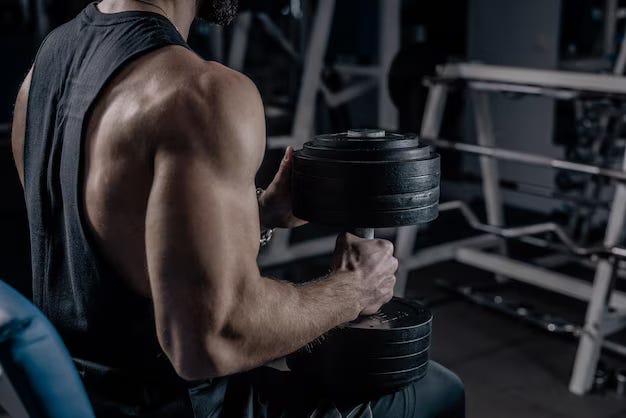
Researchers have found that resistance-trained lifters can build muscle and lose fat simultaneously without cutting calories. A new study published in the European Journal of Applied Physiology put three groups of trained lifters through 10 weeks of the same four-day-a-week program, but varied their diets. The groups eating high protein, whether at maintenance calories or in a small 250-calorie deficit, both gained close to a kilogram of muscle and lost meaningful amounts of fat. The group that just trained without dietary guidance changed almost nothing. The finding suggests that maybe you don’t need a calorie surplus to build muscle or a deficit to lose fat. All it took was 2.5 grams of protein per kilogram of bodyweight per day, and a structured program. Let’s break it down.
Aim
The study tested whether a calorie deficit produces better body recomposition results than eating at maintenance when protein intake is the same across both groups, and how both compare to training with no dietary supervision.
Methods
Thirty resistance-trained men and women (average age 23, average weight 80 kg, at least one year of training experience) were split into three groups of ten for 10 weeks:
ISO (isocaloric): Ate at maintenance calories (~2,565 kcal/day) with 2.5 g/kg/day of protein
DEF (deficit): Ate 250 kcal below maintenance (~2,262 kcal/day) with the same 2.5 g/kg/day of protein
Control: Followed the same training program with no dietary supervision
Both intervention groups were supervised by a sports nutrition doctor and followed individualised meal plans across five meals per day. The training program was identical for all groups: four days per week, three sets of 10 reps per exercise, with loads adjusted to keep 1 to 2 repetitions in reserve. Exercises included squats, deadlifts, hip thrusts, bench press, rows, and pull-ups. Body composition was assessed by DXA before and after the 10 weeks.

Results
Both the ISO and DEF groups achieved body recomposition. The control group did not.
The DEF group's fat loss was statistically significant (p<0.001). The ISO group's fat loss trended in the same direction but fell just short of significance (p=0.051). Both groups gained nearly identical amounts of lean mass, with effect sizes that were virtually the same between them. The control group showed essentially zero change in fat or muscle despite completing the full training program.
The ISO group accumulated significantly more total training volume than both other groups by the end of the study, which the authors suggest may have contributed to their recomposition results despite eating at maintenance calories.
Takeaways
Protein is the non-negotiable. Both groups ate 2.5 g/kg/day, above most hypertrophy thresholds of 1.6 to 2.2 g/kg/day, and both recomped. The control group trained just as hard and got nothing.
A small deficit accelerates fat loss without costing muscle. The DEF group cut just 250 kcal per day and lost nearly twice as much fat as the ISO group while gaining the same amount of muscle.
Eating at maintenance can still produce fat loss. The ISO group lost 1.41 kg of fat eating at maintenance calories, provided protein was high, and training was progressive.
Training without dietary guidance produces no recomposition. Diet was the clear differentiator across all groups.
This applies best to those with room to improve. Participants averaged moderate body fat levels at baseline. Leaner, more advanced lifters may see a smaller effect and may be better served focusing on one goal at a time.
The study has limitations worth noting. The sample was small at 10 per group, the trial ran only 10 weeks, food intake was not verified by weighed records, and the sample was predominantly male (26 men, 4 women). Longer trials with more advanced athletes would be interesting.
Book a call with me here.
We’ll sit down and upgrade or build out your entire training and performance program in one session.
Reference
Vargas-Molina, S., García-Palumbo, A., García-Sillero, M. et al. Comparison of two nutritional protocols in body re-composition of resistance-trained participants. Eur J Appl Physiol (2026). https://doi.org/10.1007/s00421-026-06209-6

You can also find me at dannyleejames.com for stories, personal training insights, and coaching.