

The Mind-Muscle Connection in Beginners
This study showed a targeted increases in muscle activity simply by shifting to an internal cueing during a shoulder press.

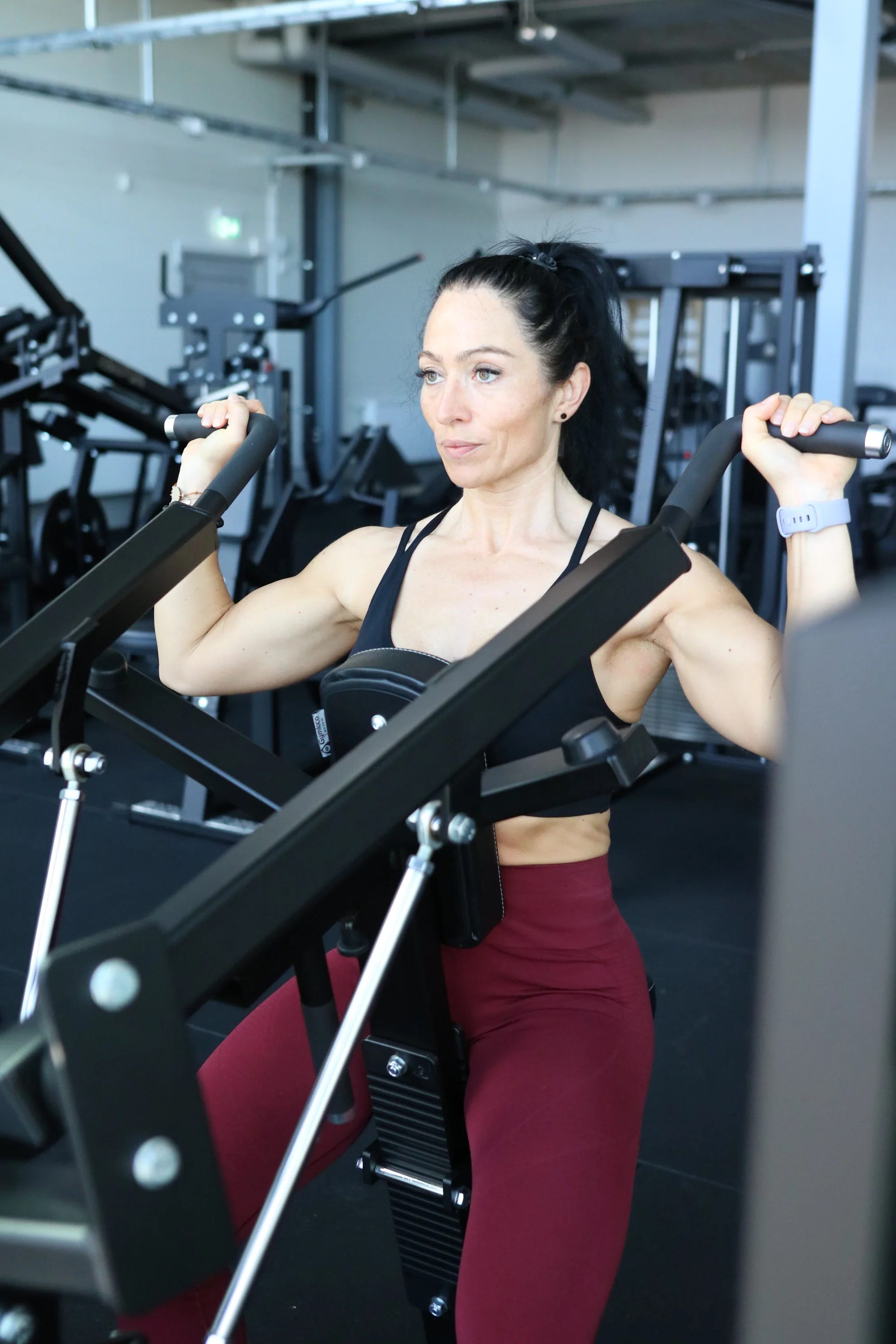
When lifters or coaches talk about "feeling the muscle work" instead of just moving the weight, what they’re most often referring to is “the mind-muscle connection”, or MMC. The idea is simple. When you deliberately focus your attention on a specific muscle during a lift, trying to ensure you actually feel that particular muscle working, that muscle has greater activity than it otherwise would. Most of the research backing this up has come from people who already lift weights regularly. This new study from Sunmoon University asked a more practical question for the average gym-goer: Does this internal focus cue still work if you've never trained before, and does focusing on one muscle quietly drag other muscles along with it, or even take away from muscles you didn't mean to involve?
Aims and Methods
The researchers recruited healthy young adults with no resistance training background and had them perform a machine-based shoulder press using a light to moderate load. Each person came in on three separate days and tried three different mental approaches: pressing with no particular focus at all, pressing while concentrating on their deltoid (the shoulder muscle), and pressing while concentrating on their triceps. Surface electrodes tracked the electrical activity of the deltoid, the triceps, and the upper trapezius, which is a muscle near the neck and shoulder blade that often gets dragged into upper-body pushing movements as a stabiliser. The machine was used specifically because it keeps the movement path locked in, removing a lot of the balancing and stabilising work your body would otherwise do with free weights, which makes it easier to isolate what attention alone is doing.


Results
The shift in attention changed things clearly and consistently. When people focused on their deltoid, deltoid activity rose. When they focused on their triceps, triceps activity rose. Each muscle responded specifically to being the target of attention, not to the exercise in general. The upper trapezius, which wasn’t the focus in either condition, stayed steady no matter what the person was thinking about. It didn’t ramp up when attention was elsewhere, which suggests the body wasn’t compensating or recruiting extra stabilising effort just because someone was concentrating harder on the movement overall.
Practical Takeaways
For someone newer to resistance training, this suggests that simply directing your attention to the muscle you’re trying to train, rather than just moving through the motion, can meaningfully change how hard that muscle works, even on your very first attempts at the lift. You don’t need years of training experience for this cue to matter. It also suggests that this focus is genuinely targeted rather than a side effect of generally trying harder, since the muscle that wasn’t part of the instruction didn’t budge. Because this was tested in a single session on a machine using a moderate load, it tells us about activation in the moment rather than guaranteed long-term muscle growth or strength gains, and it’s unclear whether the same focused effect would hold up under heavier loads or in free-weight movements where balance and stability take up more of your attention. Still, for beginners working on a machine press, using an internal focus of attention seems like a reasonable and low-risk thing to try as you learn to navigate this new
Reference
Kim D, Woo J, Lee S, Jung J, Lee D, Hong J, Yu J, Kim J, Nam Y, Jeon J. Effects of Mind–Muscle Connection on Muscle Activity During Machine-Based Shoulder Press in Untrained Individuals. Journal of Clinical Medicine. 2026; 15(10):3925. https://doi.org/10.3390/jcm15103925